The Best Present of All – Presence

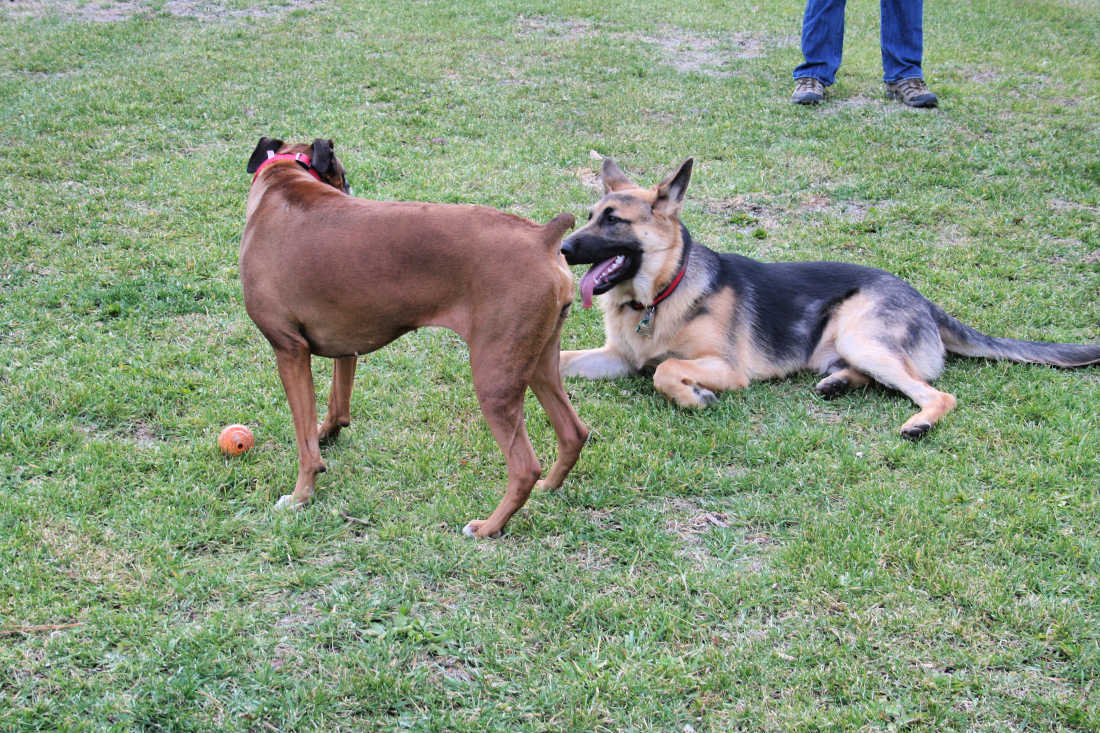
Our breath spangled the frosty December evening as we waved goodbye. My dog, Zeke, dropped, exhausted, to his mat in the living room to dream of chasing tennis balls and his best friend, our neighbors’ boxer dog, Cinder. We’d spent a good two hours watching the dogs zoom like maniacs across the lawn chasing balls and each other. The men wandered to the back for target practice while my neighbor and I leaned on the deck rail, petting Zeke and sharing stories about horses we had known and loved.

It was a perfect Sunday afternoon.


Sundays were once like this, a day of presence, first with God in church, then with family for dinner, then with family and friends for visits or fun. Presence. I think a lot about presence the days especially as social media becomes ubiquitous and most of our interactions with others occur through the computer screen.

My grandmother lived with us and she was one of seven children, so every Sunday one of my aunts or great-aunts or uncles would visit. Visiting hours were typically two or three o’clock; if family did not visit, we piled into my dad’s 1962 blue Ford with the black hood, replaced after a car accident and never repainted, and we’d rumble to the duck pond to feed the ducks or to the playground to swing and slide and play in the fresh air.

Sometimes, if we were very lucky, there would by Jiffy Pop popcorn on the stove and a fire in the “real” fireplace in the living room. Sometimes there would be movies on television or Wild Kingdom or Disney’s Magic Kingdom and soup and sandwiches and more laughter and fun.

But always, presence.

We were fully present with one another. In those days, there were no screens other than the television screen. And even though we lived in metro New York City, there were 8 channels on the television set, and Channel 21 was iffy unless the rabbit-ear antenna was adjusted just right. My mother had no hesitation ordering the television shut off when company came, either, and it stayed silent. The soundtrack of those Sunday afternoons was the laughter from my grandmother and her brothers and sisters as they shared stories and caught up on the gossip from their huge extended family.


Stories. Presence. We have lost the art of visiting and we are rapidly as a society losing the art of being present with one another.

This Christmas season, give the gift that only you can give. Give the gift of presence. Be wholly, fully present. Keep your cellphone in your pocket. Turn off the television and the radio and the music and the internet. Tell stories. Share time together. Play a game. Play with your dogs. Organize hot cocoa and cookies and skating parties and snowman building fun and tree decorating parties and tell stories.

It is the gift everyone will cherish long after the holidays are over.

The Gifts that He Gives

My husband held the bird’s nest out to me. “Feel the inside.”

I reached out and touched the tiny nest gingerly. “It’s soft.”

“The inside is lined in some soft moss,” he said. “And the outside is woven of coarse pine needles.”

I marveled at the perfect construction of the little bird’s nest. We’d watched the sparrows build their nest among the boughs of the nectarine tree in the orchard. Our seven cats miraculously ignored the plain little birds flitting back and forth to the low-hanging branch as the sparrows wove the sturdy little nest.

The mother sparrow snuggled tightly against her two little eggs while papa kept an eye out for intruders. They allowed us to water the nectarine, flying away but always returning to the swaying boughs where their eggs waited.

One day, we saw eggshells underneath the tree – little blue eggshells the color of a spring sky. We kept a safe distance, forgoing watering the transplanted trees for the privacy of a young family experiencing the joys of parenthood.

A few days ago, my husband realized that the nest was empty. The birds were gone. Just like that, the two had fledged, and the parents flew off to wherever birds go when they know a job is well done.

Wind displaced the nest, flinging it to the earth below where the eggshell clues had fallen. We were able to examine the nest at leisure. We studied the neatly woven pine needles, the strands of grass used to build up the sides to prevent the eggs from rolling out.

Mostly, we marveled at the ingenious way the mother bird had softened the nest just for her little ones.

In Sunday’s gospel reading (Luke 11:1-13) we heard the story of Jesus’ disciples asking him to teach them how to pray. And he does by teaching them to address God as “Our Father.”

Not “My father” or “Jesus’ father” – but Our Father, who art in heaven.

Our Father.

Everyone’s father.

Knock, and the door shall be opened unto you.

Ask and ye shall receive.

If a child asks for a fish, a father does not give him a snake.

If he asks for an egg, a father does not give him a scorpion.


Twelve years ago, I thought I wanted a black Labrador retriever named Molly. She was at the Prince Edward County Animal Shelter and we longed for a dog. We’d waited until after our move to Virginia to replace Mr. Foxhound, our previous dog, who was not a foxhound at all but a golden retriever mix.

Molly lounged in her kennel during our drive-by while the shelter was closed. I telephoned the animal control officer as quickly as I could. “I’d like to make an appointment to see the Labrador retrievers.”

We made the appointment and on Wednesday, April 30, drove to the shelter.

The Labradors, it turned out, were nuts.

To be fair, they were probably kept in a kennel without any socialization, but they ignored us. Molly was in a kennel with a companion and the two, when let into the play area for our meet and greet, never stopped for an instant. Nor did they greet us or even acknowledge our existence.

We rose and politely excused ourselves, letting the animal control officer know that these dogs wouldn’t do. What we thought we wanted wasn’t right for us. She asked us what we did want; what kind of dog did we think would fit in with our family?

“I have what I think you are looking for,” she said and whisked away to return with a scrawny female German shepherd.

The dog had ticks, long fur (my husband was against a long-coated dog after the Golden retriever mix killed two vacuums struggling to suck up fur embedded in the carpet), and sorrowful eyes. But she smiled at us shyly and extended a paw when asked. She sat, placed her chin on my husband’s knee, and we were smitten.

That dog, Shadow, turned out to be one of the gifts of my life. My constant companion 24/7, she chased bears off the trail for me, threw herself between me and a creepy man who stopped to talk to us on a walk and kept the deer from eating our apple trees.

Oh sure, she had her problems. She may not have been what I wanted, but she was what I needed on a deep, character-changing level. She answered the deepest need of my heart, and our relationship forever changed my life’s priorities.

God the Father gives us what we need, not what we want. I wanted a black Lab named Molly. I needed a long-haired German shepherd dog named Shadow who taught me the meaning of unconditional love, who softened my heart, who made me feel safe and loved.

Photo by Genessa Panainte on Unsplash

Sparrows are such humble, unobtrusive birds. Most people barely notice them. Yet their morning songs often delight my senses, transporting me decades in time to when I was a child, playing in the May morning light in our driveway, digging under the privet hedge, skipping under the clothesline.

The instinct of parents is to protect, give, and nurture their young. To give them good things – an egg, a fish, soft moss inside the swell of a deep nest in the boughs of a nectarine tree.

If something as simple and small as a sparrow knows to give its children good things, then what God gives us must be wonderful indeed. Knowing a gift when we receive it – a shelter dog up for adoption, an overflowing septic tank (another story for another day), the sight of a crimson cardinal on a snowy day – is grace. Embracing it is surrendering to love; to accept that we are loved beyond measure. It is a gift and an awesome, fearful thing, to be loved by this God.

The young sparrows flew away. We see them now, testing their wings, but they return frequently to the boughs of the nectarine tree where a soft nest was prepared for them.

Spiritual Growth Requires Springs of Living Water

Our spiritual growth requires abundant springs of living water. What should we do when the well runs dry?


As a transplant myself, I appreciate how hard it is to take root and grow in new soil.

I should have recognized the signs of transplant shock in the redbud tree – and offered some salve, some support as it struggled to take root.

We moved the young sapling in the cool of an early June morning. We watered it for a while, lavishing care and attention on it in its new location.

By July, the leaves turned brown and crispy. They fluttered to the ground.

“It’s dead,” we thought.

We stopped watering it. We debated digging it up, but the heat of a Virginia summer held us back. “In the fall,” we thought, “we’ll dig it up and toss the remains in the woods.”

We forgot about the poor little redbud tree.

Then the rains came. The heavens opened and streams of water gushed from the sky in a torrential thunderstorm that poured forth over an inch and a half of rain in a short cloudburst.

And a leaf appeared.

Now one leaf, but two…then three heart-shaped leaves grew during the following days.

heart shaped leaf redbud tree

Our tree wasn’t dead but alive. It needed drenching showers of cool water on its roots to recover from the pain of being ripped up by its roots, dragged over the earth, and tamped into new ground. It had depleted itself and needed renewal.

I thought of my little tree today as I contemplated an email sent to me from a church friend who heads up one of the most public ministries at church. Not only did she resign from the ministry, but she also indicated she was leaving the church itself. Perhaps it would be temporary. Perhaps for good. She did not know. But she needed time and space to figure out for herself what she believed.

I think my friend is like my little redbud tree. She poured all her energy into the ministry, into leading this group and that group, into being an indispensable part of our little church community. But in the end, all this pouring forth of self left her own spiritual well dry – so dry and barren that in order to save her spiritual life, she felt she had to leave us, the church, for a while to replenish her store of spiritual grace.

We forget that people need to quench their spiritual thirst just as much as my little tree needed to quench its thirst. We need living water to heal our souls. If we are so busy we cannot drink the living water of God, we wither and die. Like my redbud tree, we dry up. We hit the spiritual dryness the saints spoke about. We fail to produce fruit.

I pray daily for my friend that she returns to the church. She’s poured out her own spirit to everyone else, and the well has gone dry, and she needs a good, quenching spiritual rain to put down fresh roots and push forth new leaves that look up towards heaven.

Pray for her, will you?


3 d i see youMy new book, I See You – Book 2 of The Majek Family Mysteries, will be released in Fall 2019. Read Book 1, I Believe You, in paperback or Kindle. Buy your copy on Amazon.com


Miracles Are All Around Us

Miracles are all around us if we just slow down enough to stop, look, and listen. Most of us are rushing so much we’re trapped in our own thoughts. We barely get out of our own way long enough to recognize something beautiful. To recognize a God-moment in our lives takes practice but once you begin recognizing all the little miracle moments, you realize that God is as close as your heart.

This morning, my God breeze – a little whisper from God – came in the form of a bird.

My husband and I live on a 17-acre farm. We love to observe the wildlife around us. I’ve noticed a lot of activity from a male and female cardinal who seemed to be flying back and forth to a tall pine tree behind the meditation bench in the garden. Then, a few weeks ago, we began hearing the chirping – baby cheeps, little pips, the sound of new life.

But I couldn’t find the nest! Try as I might, I could not see the nest – not from the garden, not from my office windows which face the garden, not with binoculars. Mama Cardinal had hidden her nest quite well. Smart lady, especially when she and her mate chose a pine tree in a yard inhabited by six cats.

Weeks passed and I wondered how my cardinal friends fared. I almost didn’t go out to work in the vegetable garden this morning. My choices were to work on my novel, head out to the trail to do a training walk for the 5K I plan to do in September, or work in the vegetable garden.

“God, what should I do?” I prayed.

My spirit said, garden, so I donned my gardening clothes and headed out. I was picking peas when a sharp, insistent chirp made me look up.

Startled, I focused on not one, but four birds, all in a row on a branch in the peach tree. Juvenile cardinals – four of them, each one taking a turn to send me a cheery farewell before they fluttered, as if with one mind, up into the air, stumbling a bit and uncertain on their wings, each soaring to a different corner of the yard.

I was stunned. I knew instantly that it wasn’t just coincidence. These four had to be the offspring raised in the pine tree just a few hundred feet away. I have seen baby birds on their first day of flight and the nestlings tend to cluster like this on boughs and branches, sticking together until they gain strength and confidence in their wings.

And here they were…the four of them I had listened to for several weeks, chirping “Goodbye.”

You may say it is a coincidence, and that’s your prerogative. As for me, I choose to believe that God sends me little signs every once in a while to remind me of his love, and his creation, and its beauty, so I can remember the good in the world.

(c) Copyright: steve_byland / Licensed from DepositPhotos.com

Pruning Away the Dead Wood

I stepped back, studying the lattice of branches arcing overhead.  My husband stood across from me and a few feet away, studying the apple tree in our orchard.

“Here?” I asked, using the long-handled pruners to tap on the offending branch.

“That one,” he nodded.

It took every bit of strength in my upper arms to close the pruners over the thick branch, squeezing until it finally fell, crashing, to the orchard ground. My trapezius muscles ached, a deep, satisfying pain that meant we had finished pruning eight apple trees in one afternoon. A good day’s work for late winter.

20190224_154239

We collected the branches, living and dead wood, that we trimmed away, tossing it into piles on the edge of the woods where time and nature would return it to the soil. Meanwhile, I surveyed our work.

We planted the orchard the first spring after we moved into our dream farm. The seventeen acres in Virginia’s rolling piedmont seemed like heaven after the crowded canyons of office buildings and honking horns in lower Manhattan where I had toiled away at a marketing job that no longer thrilled me. Now we labored in a different jungle, coaxing thick red Virginia clay to sustain apple, peach, and other fruit trees while I swung through the internet’s trees seeking writing work.

IMG_3228.JPG

I thought of the life I had left and the phrase, “Pruning away the dead wood” while we carted branches into the woods and dodged curious farm cats twining between our legs. 

When I first learned how to prune fruit trees, I snipped delicately, tentatively. Too afraid to honestly cut away the dead and unproductive branches, my trees suffered. They bore less fruit, and the fruit they did bear was smaller, harder, bitter.

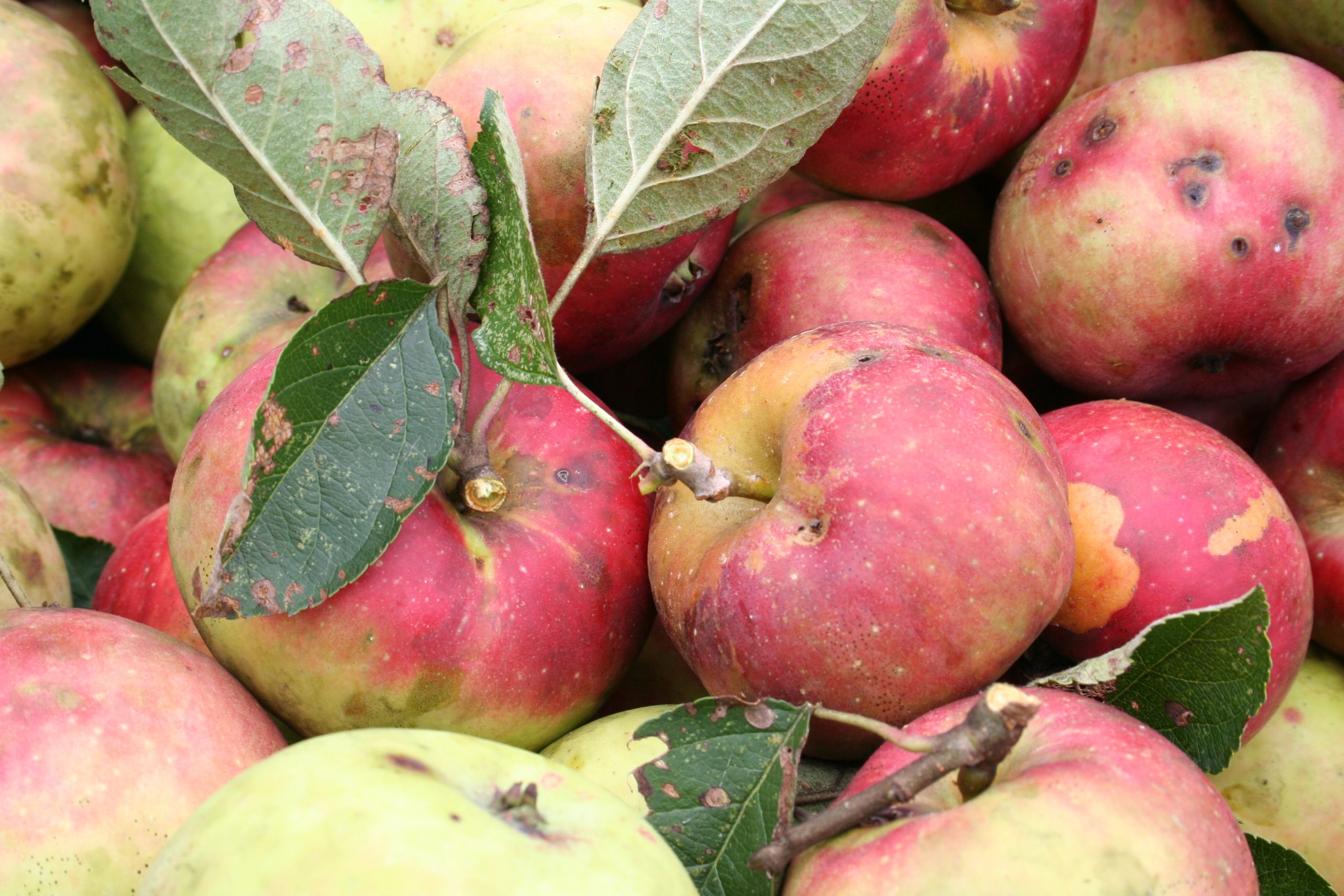
One crisp autumn day, I learned the value of drastic pruning from an old farmer high up in the Blue Ridge Mountains. Mr. Al farmed several acres of apple and peach trees on an old family farm high up in the Blue Ridge. He had the upright posture of a longtime farmer, the wiry strength of one who traversed the hilly terrain of the valley for over 86 years. We stopped at his farmstand after hiking the nearby trails and admired the bins of Jonathan, Golden Delicious, and deep ruby-colored heirloom apples.

His trees marched in neat, straight rows, the branches like ladder rungs a child might climb. He stood next to me, studying my admiring gaze. I turned to him.

After exchanging pleasantries, I asked, “How do you get your trees to produce so much beautiful fruit? Do you fertilize them?”

“Sometimes,” he said. Then he spoke the magic words. “It’s all in the pruning.”

“The pruning?”

“Prune hard in winter, gather the fruit in the fall,” he said gruffly. 

He told me more, of course, about how to grow beautiful apples and peaches, and I hope my trees bear the evidence of his field lesson that autumn day. 

Often, we are like gardeners contemplating their first foray into pruning fruit trees: we hesitate when it comes to pruning away the deadness in our lives to let the living parts flourish.

People everywhere mock Marie Kondo’s “Does this spark joy?” phrase, but joy signals vitality. To experience joy is to experience the fresh green sap running through our lives, bringing nourishment to our cells the way xylem and phloem course through the pith and cambium of my apple trees.

Pruning parts of our lives that don’t fit, that are dead or don’t work well should be easy, but it’s not. It’s difficult to step back the way we step away from our apple trees and study them to see the dead wood. We’re too close. We are like the apple tree itself trying to decide which branches go and which stay.

IMG_3210.JPG
Sometimes, nature determines which branches go. The wind knocks dead limbs off during a heavy thunderstorm; insects weaken a trunk. Then it is too late to make changes. Nature forces change.

Our lives can be like that too when nature forces change. A man diagnosed with metabolic syndrome takes up running to avoid diabetes; nature forces him to change and drop 50 pounds before he ends up dependent upon medication for life. An alcoholic spouse forces a broken marriage apart. A dead-end job leaves us sick and depleted, and we know it is our money or our lives, and we choose to live.

My trees rarely demonstrate such clear-cut examples. The apple trees, for instance, waved healthy branches against the blue February sky. What to prune, what to keep? It is then that the field lessons from old Mr. Al, the books I’ve read and my experience combine to help me choose this one, not that one, and shape the trees, so they too look like the ancient specimens in Mr. Al’s orchard. Neat branches, like rungs on a ladder, beckoning a child to climb to the top to filch sweet, crisp apples.

The only way to determine which branches must be pruned and which remain is to step back and away from the tree. It is then we can see the water sprouts. These are branches growing straight to the sky from a horizontal limb. They crowd the central canopy, making it difficult for sunlight to kiss fruit close to the trunk and sweeten it with ripeness. One must be ruthless with these upstarts, the ones that completely close out the light.

In our lives, we must be ruthless too with old habits that completely close out the light. Addictions, which close off health, light, and love, and cut us off from family and friends, must be cut away as ruthlessly as I snip off those upstart branches.

Small branches, little side shoots, must also be pruned. When one prunes these away from the main branch, more energy flows to the larger, more productive branches.

How many small habits, little vices, do we nurture, which sap our energy, time and attention? If we cut our television watching, would we have time to write the novel we dreamed of writing, finish the quilt that sits on its frame or paint the landscape we imagine?

As I wander through the orchard today, examining the handiwork of yesterday, it is surprising to see how the underlying beauty of the form, the shape, of the apple tree is revealed with heavy pruning. It’s as if the beautiful framework was there, all along, waiting to be revealed.

I muse over the many areas of my life demanding pruning. My social media addiction. The little bits of candy I eat throughout the day that slow my weight loss efforts — the time I have spent daydreaming when I could be writing.
Yes, it’s time for winter pruning.

By our fruit, we shall be known.

Is it time for you to prune in your orchard, too?

error: Content is protected !!