My copy of Ivanhoe is old, the spine rumpled, the pages dusty and yellowed with age. There’s no copyright on the volume, but the front matter, written by Leonard S. Davidow, is marked “Reading, Pa. 1936.” The publisher, Spencer, apparently had the same idea as the company that produced my husband’s leather-bound books, for it mentions that this volume is one of a series of the 100 classics everyone should read. It suggests the Walton’s episode when John Boy gives up his hard-earned pennies to buy a similar series during the Great Depression.
This book has so many stories to tell. Who, like John Boy Walton, plunked down their hard-earned pennies to subscribe to the 100 best books of all time – at a time when the unemployment rate hovered around 17%?
The pages are unmarred by writing or notes, except for the front piece. There, in pencil, is a capital letter S followed by 2.50. S for Stan’s Book Bin, price $2.50.
Stan’s Book Bin was an Aladdin’s cave of used books in Oceanside, New York. It occupied a small, narrow store, set among more prosaic establishments like Hallmark card shops and restaurants.
I can’t remember who first told me about Stan’s, but I think it was someone I worked with at Yellow Book. I used to drive over from our office in Rockville Centre to the bookstore in Oceanside on my lunch hour and browse the shelves. I was an English major at Molloy College and loved the classics; I sought books of myth and fable, inspired by Joseph’s Campbell’s series on myths on PBS at the time and my quest to write science fiction and fantasy. Like all college students, money was tight, so I haunted the corners of used bookstores, looking for bargains.
The first time I entered the dark, dusty, cramped store, Stan poked his head up from a pile of books by the counter, startling me. He was like a tall, balding, bespectacled man with stub of a pencil tucked behind his ear. He blinked and peered at book in my hands.
I held the book out to him. “This one doesn’t have a price. How much?”
I read in the New York Times archives a short article about the bookshop. It said that Stan began his shop in 1983 with 2,000 to 4,000 volumes, but by 1987, his shop housed an estimated 40,000 books. By the time I stumbled into the dusty treasure trove around 1990, it probably had double that amount. At least it seemed that way to me. Books filled every shelf, nook and cranny, lovely books, old books, big books with outlandish illustrations and jaggedly ripped overs. Maps, charts, paperbacks, hard covers, you name it. Every square inch of that shop was crammed with books all the way to the ceiling and in the aisles as well. And he had opened the basement, too, making it part of the shop, filling the stairwell with shelves of books. It was probably against all fire codes. I didn’t care. I could die happily between Milton and Voltaire.
Last night, as I opened Ivanhoe, the smell of that beloved bookshop wafted up to me, and I was instantly transported to Stan’s; a young college student full of hope and dreams, who could sit at the typewriter for hours writing stories no one would read. That younger me would write until midnight, happily and messily typing thousands of words of epic sword and sorcery fantasy. My days were filled with words: classes at Molloy, afternoons and early evenings writing advertising copy for a division of the yellow pages, evenings and late nights writing stories and magazine articles. The articles sold. The stories didn’t. I didn’t care. Spinning word pictures through my typewriter was all that mattered to the 20-something me.
Among all the copies of Ivanhoe in this house – the fancy red leather-bound volume on my husband’s bookshelf, the paperback copy one of us bought for some reason or other, and this one, purchased at Stan’s in my college years – it is the used volume from Stan’s, the 1936 edition with the fading spine and toast-colored pages, that I treasure.
As I open the cover again to plunge into Scott’s wordy, 18th-century romance, the dusty smell of Stan’s book shop hovers like a mirage over the pages. The smell transports me back to the crowded aisles and hours spent meandering among the shelves seeking treasures, the long nights at the keyboard writing for an audience I could only imagine. The ghostly memory of who I was then emerges from the memories, and I borrow some of the creative vigor from that young, idealistic college student. I return, refreshed, to write again. Perhaps someone will read them, perhaps not. Perhaps my writing will end up in the futuristic, digital version of a Stan’s Book Bin. No matter. I write, spinning word pictures, thanking the Stans of this world for building Aladdin’s caves of used books where college students can pick up classics for two-fifty and the price of an hour between classes.
No, leather-bound books with expensive illustrations are for my careful spouse who barely even mars the spine as he handles them like the treasures they are. I am a rough and tumble reader, taking books with me everywhere, tucking them into my purse for long waits at the DMV or the dentist office, holding them open with one hand while stirring soup with the other.
My copy of Ivanhoe is old, the spine rumpled, the pages dusty and yellowed with age. There’s no copyright on the volume, but the front matter, written by Leonard S. Davidow, is marked “Reading, Pa. 1936.” The publisher, Spencer, apparently had the same idea as the company that produced my husband’s leather-bound books, for it mentions that this volume is one of a series of the 100 classics everyone should read. It suggests the Walton’s episode when John Boy gives up his hard-earned pennies to buy a similar series during the Great Depression.
This book has so many stories to tell. Who, like John Boy Walton, plunked down their hard-earned pennies to subscribe to the 100 best books of all time – at a time when the unemployment rate hovered around 17%?
The pages are unmarred by writing or notes, except for the front piece. There, in pencil, is a capital letter S followed by 2.50. S for Stan’s Book Bin, price $2.50.
Stan’s Book Bin was an Aladdin’s cave of used books in Oceanside, New York. It occupied a small, narrow store, set among more prosaic establishments like Hallmark card shops and restaurants.
I can’t remember who first told me about Stan’s, but I think it was someone I worked with at Yellow Book. I used to drive over from our office in Rockville Centre to the bookstore in Oceanside on my lunch hour and browse the shelves. I was an English major at Molloy College and loved the classics; I sought books of myth and fable, inspired by Joseph’s Campbell’s series on myths on PBS at the time and my quest to write science fiction and fantasy. Like all college students, money was tight, so I haunted the corners of used bookstores, looking for bargains.
The first time I entered the dark, dusty, cramped store, Stan poked his head up from a pile of books by the counter, startling me. He was like a tall, balding, bespectacled man with stub of a pencil tucked behind his ear. He blinked and peered at book in my hands.
I held the book out to him. “This one doesn’t have a price. How much?”
I read in the New York Times archives a short article about the bookshop. It said that Stan began his shop in 1983 with 2,000 to 4,000 volumes, but by 1987, his shop housed an estimated 40,000 books. By the time I stumbled into the dusty treasure trove around 1990, it probably had double that amount. At least it seemed that way to me. Books filled every shelf, nook and cranny, lovely books, old books, big books with outlandish illustrations and jaggedly ripped overs. Maps, charts, paperbacks, hard covers, you name it. Every square inch of that shop was crammed with books all the way to the ceiling and in the aisles as well. And he had opened the basement, too, making it part of the shop, filling the stairwell with shelves of books. It was probably against all fire codes. I didn’t care. I could die happily between Milton and Voltaire.
Last night, as I opened Ivanhoe, the smell of that beloved bookshop wafted up to me, and I was instantly transported to Stan’s; a young college student full of hope and dreams, who could sit at the typewriter for hours writing stories no one would read. That younger me would write until midnight, happily and messily typing thousands of words of epic sword and sorcery fantasy. My days were filled with words: classes at Molloy, afternoons and early evenings writing advertising copy for a division of the yellow pages, evenings and late nights writing stories and magazine articles. The articles sold. The stories didn’t. I didn’t care. Spinning word pictures through my typewriter was all that mattered to the 20-something me.
Among all the copies of Ivanhoe in this house – the fancy red leather-bound volume on my husband’s bookshelf, the paperback copy one of us bought for some reason or other, and this one, purchased at Stan’s in my college years – it is the used volume from Stan’s, the 1936 edition with the fading spine and toast-colored pages, that I treasure.
As I open the cover again to plunge into Scott’s wordy, 18th-century romance, the dusty smell of Stan’s book shop hovers like a mirage over the pages. The smell transports me back to the crowded aisles and hours spent meandering among the shelves seeking treasures, the long nights at the keyboard writing for an audience I could only imagine. The ghostly memory of who I was then emerges from the memories, and I borrow some of the creative vigor from that young, idealistic college student. I return, refreshed, to write again. Perhaps someone will read them, perhaps not. Perhaps my writing will end up in the futuristic, digital version of a Stan’s Book Bin. No matter. I write, spinning word pictures, thanking the Stans of this world for building Aladdin’s caves of used books where college students can pick up classics for two-fifty and the price of an hour between classes.
I am finally reading Ivanhoe by Sir Walter Scott. Given that we have not one but three copies of this work, you may be surprised to learn that it is not my favorite book. It’s not even a book I’ve been able to finish. I’ve gotten as far as the first chapter and set it aside. Sentences such as, “The human figures which completed this landscape were in number two…” make me twitch; I want to take out my red pen and scratch through it, writing, “Two men…” Scott’s style reminds me of my early writing and my college fiction writing professor who, with all good intentions, handed me a copy of Hemingway’s short stories and suggested I study his sentence structure and copy it to learn how to pare my writing down. To this day, I loathe Hemingway and his bare, staccato-style prose; everyone claims they like such prose, but it’s boring. And I don’t read to be bored. Nobody does. We read to be delighted, entertained, entrance, to be transported to far off lands and into the lives of others, and bare, staccato-like prose never helped me mind-travel anywhere except to wonder when the author would finally say what he meant.
This copy of Ivanhoe is mine. My husband has a newer copy from a beautiful series of leather- books. It’s something like the books everyone must read before they die or some such grouping of literature. I love looking at John’s books, but they aren’t for the likes of me. I’m a messy reader. I read while sipping wine, and spill scarlet drops on the pages. I read in the bathtub, slipping into sleep and dousing books with wet hands hastily grabbing a novel before it takes the plunge into soaked oblivion.
No, leather-bound books with expensive illustrations are for my careful spouse who barely even mars the spine as he handles them like the treasures they are. I am a rough and tumble reader, taking books with me everywhere, tucking them into my purse for long waits at the DMV or the dentist office, holding them open with one hand while stirring soup with the other.
My copy of Ivanhoe is old, the spine rumpled, the pages dusty and yellowed with age. There’s no copyright on the volume, but the front matter, written by Leonard S. Davidow, is marked “Reading, Pa. 1936.” The publisher, Spencer, apparently had the same idea as the company that produced my husband’s leather-bound books, for it mentions that this volume is one of a series of the 100 classics everyone should read. It suggests the Walton’s episode when John Boy gives up his hard-earned pennies to buy a similar series during the Great Depression.
This book has so many stories to tell. Who, like John Boy Walton, plunked down their hard-earned pennies to subscribe to the 100 best books of all time – at a time when the unemployment rate hovered around 17%?
The pages are unmarred by writing or notes, except for the front piece. There, in pencil, is a capital letter S followed by 2.50. S for Stan’s Book Bin, price $2.50.
Stan’s Book Bin was an Aladdin’s cave of used books in Oceanside, New York. It occupied a small, narrow store, set among more prosaic establishments like Hallmark card shops and restaurants.
I can’t remember who first told me about Stan’s, but I think it was someone I worked with at Yellow Book. I used to drive over from our office in Rockville Centre to the bookstore in Oceanside on my lunch hour and browse the shelves. I was an English major at Molloy College and loved the classics; I sought books of myth and fable, inspired by Joseph’s Campbell’s series on myths on PBS at the time and my quest to write science fiction and fantasy. Like all college students, money was tight, so I haunted the corners of used bookstores, looking for bargains.
The first time I entered the dark, dusty, cramped store, Stan poked his head up from a pile of books by the counter, startling me. He was like a tall, balding, bespectacled man with stub of a pencil tucked behind his ear. He blinked and peered at book in my hands.
I held the book out to him. “This one doesn’t have a price. How much?”
I read in the New York Times archives a short article about the bookshop. It said that Stan began his shop in 1983 with 2,000 to 4,000 volumes, but by 1987, his shop housed an estimated 40,000 books. By the time I stumbled into the dusty treasure trove around 1990, it probably had double that amount. At least it seemed that way to me. Books filled every shelf, nook and cranny, lovely books, old books, big books with outlandish illustrations and jaggedly ripped overs. Maps, charts, paperbacks, hard covers, you name it. Every square inch of that shop was crammed with books all the way to the ceiling and in the aisles as well. And he had opened the basement, too, making it part of the shop, filling the stairwell with shelves of books. It was probably against all fire codes. I didn’t care. I could die happily between Milton and Voltaire.
Last night, as I opened Ivanhoe, the smell of that beloved bookshop wafted up to me, and I was instantly transported to Stan’s; a young college student full of hope and dreams, who could sit at the typewriter for hours writing stories no one would read. That younger me would write until midnight, happily and messily typing thousands of words of epic sword and sorcery fantasy. My days were filled with words: classes at Molloy, afternoons and early evenings writing advertising copy for a division of the yellow pages, evenings and late nights writing stories and magazine articles. The articles sold. The stories didn’t. I didn’t care. Spinning word pictures through my typewriter was all that mattered to the 20-something me.
Among all the copies of Ivanhoe in this house – the fancy red leather-bound volume on my husband’s bookshelf, the paperback copy one of us bought for some reason or other, and this one, purchased at Stan’s in my college years – it is the used volume from Stan’s, the 1936 edition with the fading spine and toast-colored pages, that I treasure.
As I open the cover again to plunge into Scott’s wordy, 18th-century romance, the dusty smell of Stan’s book shop hovers like a mirage over the pages. The smell transports me back to the crowded aisles and hours spent meandering among the shelves seeking treasures, the long nights at the keyboard writing for an audience I could only imagine. The ghostly memory of who I was then emerges from the memories, and I borrow some of the creative vigor from that young, idealistic college student. I return, refreshed, to write again. Perhaps someone will read them, perhaps not. Perhaps my writing will end up in the futuristic, digital version of a Stan’s Book Bin. No matter. I write, spinning word pictures, thanking the Stans of this world for building Aladdin’s caves of used books where college students can pick up classics for two-fifty and the price of an hour between classes.
No, leather-bound books with expensive illustrations are for my careful spouse who barely even mars the spine as he handles them like the treasures they are. I am a rough and tumble reader, taking books with me everywhere, tucking them into my purse for long waits at the DMV or the dentist office, holding them open with one hand while stirring soup with the other.
My copy of Ivanhoe is old, the spine rumpled, the pages dusty and yellowed with age. There’s no copyright on the volume, but the front matter, written by Leonard S. Davidow, is marked “Reading, Pa. 1936.” The publisher, Spencer, apparently had the same idea as the company that produced my husband’s leather-bound books, for it mentions that this volume is one of a series of the 100 classics everyone should read. It suggests the Walton’s episode when John Boy gives up his hard-earned pennies to buy a similar series during the Great Depression.
This book has so many stories to tell. Who, like John Boy Walton, plunked down their hard-earned pennies to subscribe to the 100 best books of all time – at a time when the unemployment rate hovered around 17%?
The pages are unmarred by writing or notes, except for the front piece. There, in pencil, is a capital letter S followed by 2.50. S for Stan’s Book Bin, price $2.50.
Stan’s Book Bin was an Aladdin’s cave of used books in Oceanside, New York. It occupied a small, narrow store, set among more prosaic establishments like Hallmark card shops and restaurants.
I can’t remember who first told me about Stan’s, but I think it was someone I worked with at Yellow Book. I used to drive over from our office in Rockville Centre to the bookstore in Oceanside on my lunch hour and browse the shelves. I was an English major at Molloy College and loved the classics; I sought books of myth and fable, inspired by Joseph’s Campbell’s series on myths on PBS at the time and my quest to write science fiction and fantasy. Like all college students, money was tight, so I haunted the corners of used bookstores, looking for bargains.
The first time I entered the dark, dusty, cramped store, Stan poked his head up from a pile of books by the counter, startling me. He was like a tall, balding, bespectacled man with stub of a pencil tucked behind his ear. He blinked and peered at book in my hands.
I held the book out to him. “This one doesn’t have a price. How much?”
I read in the New York Times archives a short article about the bookshop. It said that Stan began his shop in 1983 with 2,000 to 4,000 volumes, but by 1987, his shop housed an estimated 40,000 books. By the time I stumbled into the dusty treasure trove around 1990, it probably had double that amount. At least it seemed that way to me. Books filled every shelf, nook and cranny, lovely books, old books, big books with outlandish illustrations and jaggedly ripped overs. Maps, charts, paperbacks, hard covers, you name it. Every square inch of that shop was crammed with books all the way to the ceiling and in the aisles as well. And he had opened the basement, too, making it part of the shop, filling the stairwell with shelves of books. It was probably against all fire codes. I didn’t care. I could die happily between Milton and Voltaire.
Last night, as I opened Ivanhoe, the smell of that beloved bookshop wafted up to me, and I was instantly transported to Stan’s; a young college student full of hope and dreams, who could sit at the typewriter for hours writing stories no one would read. That younger me would write until midnight, happily and messily typing thousands of words of epic sword and sorcery fantasy. My days were filled with words: classes at Molloy, afternoons and early evenings writing advertising copy for a division of the yellow pages, evenings and late nights writing stories and magazine articles. The articles sold. The stories didn’t. I didn’t care. Spinning word pictures through my typewriter was all that mattered to the 20-something me.
Among all the copies of Ivanhoe in this house – the fancy red leather-bound volume on my husband’s bookshelf, the paperback copy one of us bought for some reason or other, and this one, purchased at Stan’s in my college years – it is the used volume from Stan’s, the 1936 edition with the fading spine and toast-colored pages, that I treasure.
As I open the cover again to plunge into Scott’s wordy, 18th-century romance, the dusty smell of Stan’s book shop hovers like a mirage over the pages. The smell transports me back to the crowded aisles and hours spent meandering among the shelves seeking treasures, the long nights at the keyboard writing for an audience I could only imagine. The ghostly memory of who I was then emerges from the memories, and I borrow some of the creative vigor from that young, idealistic college student. I return, refreshed, to write again. Perhaps someone will read them, perhaps not. Perhaps my writing will end up in the futuristic, digital version of a Stan’s Book Bin. No matter. I write, spinning word pictures, thanking the Stans of this world for building Aladdin’s caves of used books where college students can pick up classics for two-fifty and the price of an hour between classes.
I am finally reading Ivanhoe by Sir Walter Scott. Given that we have not one but three copies of this work, you may be surprised to learn that it is not my favorite book. It’s not even a book I’ve been able to finish. I’ve gotten as far as the first chapter and set it aside. Sentences such as, “The human figures which completed this landscape were in number two…” make me twitch; I want to take out my red pen and scratch through it, writing, “Two men…” Scott’s style reminds me of my early writing and my college fiction writing professor who, with all good intentions, handed me a copy of Hemingway’s short stories and suggested I study his sentence structure and copy it to learn how to pare my writing down. To this day, I loathe Hemingway and his bare, staccato-style prose; everyone claims they like such prose, but it’s boring. And I don’t read to be bored. Nobody does. We read to be delighted, entertained, entrance, to be transported to far off lands and into the lives of others, and bare, staccato-like prose never helped me mind-travel anywhere except to wonder when the author would finally say what he meant.
This copy of Ivanhoe is mine. My husband has a newer copy from a beautiful series of leather- books. It’s something like the books everyone must read before they die or some such grouping of literature. I love looking at John’s books, but they aren’t for the likes of me. I’m a messy reader. I read while sipping wine, and spill scarlet drops on the pages. I read in the bathtub, slipping into sleep and dousing books with wet hands hastily grabbing a novel before it takes the plunge into soaked oblivion.
No, leather-bound books with expensive illustrations are for my careful spouse who barely even mars the spine as he handles them like the treasures they are. I am a rough and tumble reader, taking books with me everywhere, tucking them into my purse for long waits at the DMV or the dentist office, holding them open with one hand while stirring soup with the other.
My copy of Ivanhoe is old, the spine rumpled, the pages dusty and yellowed with age. There’s no copyright on the volume, but the front matter, written by Leonard S. Davidow, is marked “Reading, Pa. 1936.” The publisher, Spencer, apparently had the same idea as the company that produced my husband’s leather-bound books, for it mentions that this volume is one of a series of the 100 classics everyone should read. It suggests the Walton’s episode when John Boy gives up his hard-earned pennies to buy a similar series during the Great Depression.
This book has so many stories to tell. Who, like John Boy Walton, plunked down their hard-earned pennies to subscribe to the 100 best books of all time – at a time when the unemployment rate hovered around 17%?
The pages are unmarred by writing or notes, except for the front piece. There, in pencil, is a capital letter S followed by 2.50. S for Stan’s Book Bin, price $2.50.
Stan’s Book Bin was an Aladdin’s cave of used books in Oceanside, New York. It occupied a small, narrow store, set among more prosaic establishments like Hallmark card shops and restaurants.
I can’t remember who first told me about Stan’s, but I think it was someone I worked with at Yellow Book. I used to drive over from our office in Rockville Centre to the bookstore in Oceanside on my lunch hour and browse the shelves. I was an English major at Molloy College and loved the classics; I sought books of myth and fable, inspired by Joseph’s Campbell’s series on myths on PBS at the time and my quest to write science fiction and fantasy. Like all college students, money was tight, so I haunted the corners of used bookstores, looking for bargains.
The first time I entered the dark, dusty, cramped store, Stan poked his head up from a pile of books by the counter, startling me. He was like a tall, balding, bespectacled man with stub of a pencil tucked behind his ear. He blinked and peered at book in my hands.
I held the book out to him. “This one doesn’t have a price. How much?”
I read in the New York Times archives a short article about the bookshop. It said that Stan began his shop in 1983 with 2,000 to 4,000 volumes, but by 1987, his shop housed an estimated 40,000 books. By the time I stumbled into the dusty treasure trove around 1990, it probably had double that amount. At least it seemed that way to me. Books filled every shelf, nook and cranny, lovely books, old books, big books with outlandish illustrations and jaggedly ripped overs. Maps, charts, paperbacks, hard covers, you name it. Every square inch of that shop was crammed with books all the way to the ceiling and in the aisles as well. And he had opened the basement, too, making it part of the shop, filling the stairwell with shelves of books. It was probably against all fire codes. I didn’t care. I could die happily between Milton and Voltaire.
Last night, as I opened Ivanhoe, the smell of that beloved bookshop wafted up to me, and I was instantly transported to Stan’s; a young college student full of hope and dreams, who could sit at the typewriter for hours writing stories no one would read. That younger me would write until midnight, happily and messily typing thousands of words of epic sword and sorcery fantasy. My days were filled with words: classes at Molloy, afternoons and early evenings writing advertising copy for a division of the yellow pages, evenings and late nights writing stories and magazine articles. The articles sold. The stories didn’t. I didn’t care. Spinning word pictures through my typewriter was all that mattered to the 20-something me.
Among all the copies of Ivanhoe in this house – the fancy red leather-bound volume on my husband’s bookshelf, the paperback copy one of us bought for some reason or other, and this one, purchased at Stan’s in my college years – it is the used volume from Stan’s, the 1936 edition with the fading spine and toast-colored pages, that I treasure.
As I open the cover again to plunge into Scott’s wordy, 18th-century romance, the dusty smell of Stan’s book shop hovers like a mirage over the pages. The smell transports me back to the crowded aisles and hours spent meandering among the shelves seeking treasures, the long nights at the keyboard writing for an audience I could only imagine. The ghostly memory of who I was then emerges from the memories, and I borrow some of the creative vigor from that young, idealistic college student. I return, refreshed, to write again. Perhaps someone will read them, perhaps not. Perhaps my writing will end up in the futuristic, digital version of a Stan’s Book Bin. No matter. I write, spinning word pictures, thanking the Stans of this world for building Aladdin’s caves of used books where college students can pick up classics for two-fifty and the price of an hour between classes.
The Inspiration Behind I SEE YOU
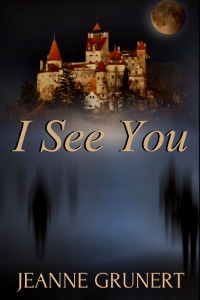
Novelists draw from many sources for their inspiration. I draw from my childhood growing up on Long Island, New York. The Dalinger Estate, White Oak Hall, features prominently throughout I SEE YOU my new novel. I draw from three estates on Long Island to create the unique setting for much of the mystery in I SEE YOU.

Old Westbury Gardens
Old Westbury Gardens includes both Westbury House and the gardens designed by the same architect who designed the house. It is truly a gem of Long Island. It was donated by the Phipps family who built the home to the county in the late 1950s and was preserved intact, including furnishings, making it a true treasure.
When I was in junior high school, my older sister completed an internship in the gardens there as part of her biology major in college. I would accompany her to the gardens and have free run while she worked. I spent many hours exploring every nook and cranny of the old estate. On days when the house was open for tours, I loved seeing the interior of the mansion. My favorite room was the music room, a ballroom where concerts and dances were held. I transformed this room, with a bit of poetic license, into the ballroom in the fictional White Oak Hall.
Learn more: Old Westbury Gardens
Oheka Castle
Oheka Castle can be seen for miles around from the North Shore of Long Island. Long Island is mostly flat thanks to glacial action but Otto Herman Khan, the wealthy man who built the enormous estate, actually had soil piled up so that his castle could be seen for miles around.
In 1994, when I was working for one of the prestigious garden centers on the North Shore, we received a call from the new owners of Oheka Castle. We met with them on the grounds and I saw the building under refurbishment. The entire building had been sadly neglected, as had the gardens. After Khan sold the building, it went through a series of changes, including time spent as a military prep school, and the new owners were restoring it to its original 1920s splendor.
I’m happy to say that the castle is now restored and open for events. It’s a hotel, event center, and more. And it’s gorgeous! The library was restored when I saw it in the 1990s and that’s the library I imagined when I wrote about Andrew Dalinger’s library in I SEE YOU.
Learn more: Oheka Castle
Target Rock National Wildlife Refuge (the former Ebsterstadt Estate)
By far the biggest influence on the imaginary White Oak Hall, however, is what is known today as Target Rock National Wildlife Refuge. My husband took me there for long walks while we were dating; we had many lovely picnics on its pebbled beach. It was a quiet, seldom-visited sanctuary in the busy, crowded urban area we lived.
Target Rock itself is a gigantic boulder that during high tide sits out in the bay. During the American Revolution, the British used it for target practice. At low tide, you can walk out and climb to the top.
The estate was once the home of Ferdinand Eberstadt. He was a wealthy lawyer, a diplomat, and a government employee who worked with the CIA and FBI. Eberstadt’s estate consisted of a Georgian manor house and 80 acres of prime land in Lloyd Harbor including beachfront property. The gardens and home were donated to the National Park Service and turned to the Department of the Interior as a wildlife sanctuary. It was this act in 1969 that ended up stopping Shoreham Nuclear Power Plant from being constructed; the danger to migrating wildlife protected on the land helped stop the plant from being built. (Which, as a Long Islander, I can tell you was a relief. You cannot get off the island if an emergency happens. It’s too congested and there are too few bridges and tunnels. We dreaded Shoreham).
When I first visited Target Rock, the mansion was still standing. It was a gloomy old structure with tattered curtains and shades from its days as a headquarters for the Park Service. I’d peer through the dusty windows hoping to see some of its former grandeur, but aside from the old radiators and some interesting woodwork, it wasn’t much to see.
The gardens were sadly neglected too but in the spring you could see just rows and rows of rhododendrons and laurels lining the pathways. The best part of the gardens is the freshwater pond. As in I SEE YOU the pond lies just a few yards from the ocean. There is now a bird-watching blind constructed on its banks and I loved to sit there and observe the great white heron fish. My walks at Target Rock were my Sunday morning “church” in the days before I returned to my Catholic faith. I’d pray, nature watch, and pray some more.
Learn more about Target Rock.
But What About the Ghost?
Yes, I SEE YOU is a ghost story. None of the places mentioned above are said to be haunted. The haunted mansion on Long Island is the old Woolworth mansion. I’ve never been to the estate and it was privately owned when I lived near its location. However, a good friend who was a professional photographer gained permission to photograph the estate.
She took a picture…and saw a mysterious figure in the window.
Of the empty mansion.
I saw the picture. It was many years ago, but the ghostly image in the window still gives me the shivers. At the time the image was taken, computer graphics were in their infancy and she didn’t have a computer, so it wasn’t a photoshopped image. It just was…creepy.
The mansion itself is said to be haunted by Woolworth’s daughter and I’ve heard all sorts of stories about rapping sounds on the pipes and odd shadows. It was enough to get my imagination primed for the ghostly happenings in I SEE YOU.
Did you miss the first book? It’s still available!
It Was Mine Selected as Top Novella, Receives Great Reviews
My novella, It Was Mine, is receiving pure 5-star ratings on both Amazon and Goodreads – the top rating you can give a book. Shortly after Christmas, I found out that the blogger over at Franciscan Mom had awarded It Was Mine the title of “Best Novella” of 2018.

I’m thrilled. It’s not a Pulitzer, but it’s something, and it gives me a great sense of satisfaction to know that my story touched at least one person so much that she wanted to share it as a book worthy of recommendation to others.
If you haven’t purchased your copy of It Was Mine yet, it is available in paperback and as a Kindle e-book on Amazon.
The story, as some have said, is a sort of George Bailey meets the Twilight Zone. Elderly, lonely schoolteacher Stanley Huckle wonders what his life would have been like if he had made other choices. He’s always been the good son, the dependable one. He stays home to care for his aging parents. His shyness keeps him from asking his best girl to marry him. And now he is alone and lonely, and he wonders what if he had made different choices?

Then along comes a strange furnace repairman who offers him much, much more than a money back guarantee. He offers him a new chance at life. Should he choose a fork in the road not taken? Should Stanely go back in time and relive a moment of his life to change his destiny? What if he does…and what if he doesn’t?
There’s a surprise twist at the end that I almost didn’t put into the book but which seems to delight my readers so I’m glad I kept it. It’s a short read (I think Amazon puts the book at “one-hour reads” or something like it) and very “clean” Twilight Zone kind of fun with more character than spookiness. I think you will enjoy it and I hope you buy, borrow, or find a copy of It Was Mine.
Say I Love You in ASL
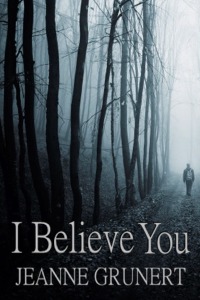
From my book, I Believe You:
David thrust his backpack at him, handed him a $5 bill for lunch, and kissed Eddie on top of the head. He raised his hand, pinky finger and index finger pointed skyward, middle two fingers folded down, thumb out in the ILY gesture. I love you. Eddie flashed ILY back and headed out the back door. David stepped through the mudroom door to the back porch, watching as his youngest raced down the driveway, crooked tie flapping, jacket loose and unbuttoned.
One of the questions I’m asked a lot is, “Do you speak ASL?” ASL stands for American Sign Language. One of the main characters in my book, an eleven-year-old boy named Eddie, is deaf. Throughout the book, Eddie communicates solely through ASL; his deafness plays an important literal and symbolic part in the story.
Would it surprise you to learn that I don’t speak ASL? When I started writing the second draft of the book, I knew that Eddie was deaf, but I had no idea how to portray this. Should he lip read? That would be easier…but it didn’t feel right. ASL was the way to go, but what do you do when you don’t speak a language or have direct, personal insight into deaf culture, and you want to write about a deaf character?
I often say, sometimes jokingly and sometimes seriously, that God wanted this book to be written, and nothing reminds me of that more than how the ASL scenes in the book came together.
My original plan to write the dialogue was simply to do just that; write it out, and perhaps later, find someone fluent in ASL and hire them to edit the scenes. I wasn’t quite sure how to accomplish this, but I felt that at least I’d get a good first draft down on paper and would figure out the details later on.
I also used a site called LifePrint to learn some basic ASL symbols; I’d watch their videos and then try to describe what the ASL speakers were doing. I knew it wasn’t perfect, but at this early stage, it didn’t have to be perfect, just written.
Then came Donna. Donna was my editor at a company called LoveToKnow.com, and even after we both left the company in 2011, we remained close friends. I contacted Donna to ask her about how to find a first-line reader, someone to help me with the development of the story, and she generously offered her time and talents. I would send her one chapter a week, she would critique it, and help me flesh out some of the scenes.
One of the huge surprises, however, was when I received the very first chapter back from Donna. She had fleshed out the ASL dialogue and added a note – “I have a friend who is deaf and I learned ASL to communicate with her. I can help you with the descriptions.”
Problem solved. In one month, I’d moved from the inspiration of having a deaf character to having an editor, and one of the best writing teachers I know, who happened to speak ASL, editing my book.
In honor of all those who speak in ASL, and as a heartfelt thank you to Donna, here is how Eddie and his dad would have exchanged signs during that scene.
[youtube https://www.youtube.com/watch?v=nqmiespIQlI]
Long Island’s Gold Coast
The primary setting for my novel, I Believe You, is Long Island’s famous “Gold Coast.” The Majek family lives in Brookville, an elite, upscale town on the North Shore of Long Island. Although Tibor, David’s father and the patriarch of the family, still lives in Bellerose, I purposely chose Brookville for David. Here’s why.

To me, Bellerose represents the immigrant families who were moving up in the world. My grandparents were such a family. My grandparents immigrated from Germany in the early 20th century and lived in a roach-infested tenement in the Bronx until my dad was a teenager.
Immigrants saved their pennies to move out of the tenements and into their own homes. My grandparents, especially my grandmother, cherished her little home in Bellerose. To her, it was everything she had dreamed of in America.
In the early 1940s, my grandparents finally achieved the American dream – a house! They purchased a Cape-style house on a tiny lot in Bellerose. Next door were immigrants; on the other side was a family whose ancestors arrived on the Mayflower. They were proud of that fact. I remember it distinctly because they had a plaque in the living room to commemorate their ancestry.
When I needed to place Tibor and indeed, the entire Majek family, in their home, my thoughts strayed to my grandmother’s neighborhood in Bellerose. I couldn’t image more of a melting pot and a place where Tibor, who may have exaggerated just a little bit, who had grown up with a dirt floor in his native Czech Republic, would feel he had finally “arrived” at the American dream.
But David? Not David. Contrast Tibor’s modest house with David’s “Gold Coast” Tudor home. “Your house is too big,” little Elizabeth says to him in the book. “It’s like a castle.” I wanted to imply Gold Coast mansion, even though I think David’s house falls slightly short of mansion status.
Marrying into an aristocratic North Shore family, as the Tarleton family surely were, meant he had to provide Cathy a home worthy of her heritage. For all of Cathy’s generosity, she was a bit spoiled. She took for granted that she would always have the best around her, and David provided that with the home in Brookville.
When I was a child, my dad would pile us all into the car on a crisp autumn Sunday afternoon for a drive into “the country.” That meant a drive along Northern Boulevard and through the curving, tree-lined lanes of Brookville and Old Brookville. Later on as a college student, I rode horses at fancy stable frequented by the super wealthy in Brookville. Much later, in my 20s, I worked in the area. I grew very familiar with the families, the mansions, the whole “North Shore” and “Gold Coast” mindset which I imagine that Cathy and David, to some degree, had as part of their surroundings.
Setting in novels is critical for their realism. It can also hint at deeper meanings. Tibor’s immigrant roots, David’s Brookville home…each bears with it a shade of meaning in I Believe You.
For more about the setting in I Believe You:
What Readers Are Saying
Amazon reviews posted this week:
Just for Fun – Eddie’s Kolacky Recipe
In my novel, I Believe You, Eddie plays an important part in the story. Eddie is an 11-year old deaf boy, and the youngest son of the protagonist, David. At the end of the book, Eddie and his new friend Turquoise make a plate of kolachy, a special treat, from an old family recipe. They decide to take the cookies to Tibor, the patriarch of the family, which sets in motion the book’s finale.
I thought it might be fun to share a collection of kolachy recipes from around the web!

- Czech kolachy – probably the closest recipe to what Eddie would have found in his mom’s cookbook.
- Czech Pastry – oh boy. This one would be found in grandpa’s house at Christmas, purchased from a Manhattan specialty bakery, I am sure!
- Cream Cheese Kolacky – not sure his grandma would have made the dough with cream cheese, but it is supposed to be exceptional.
Did you know? From Wikipedia –
- Several cities, including Verdigre, Nebraska; Wilber, Nebraska; Prague, Nebraska; Caldwell, Texas;[3] East Bernard, Texas; Crosby, Texas; Hallettsville, Texas; Prague, Oklahoma; St. Ludmila’s Catholic Church in Cedar Rapids, Iowa; and Kewaunee, Wisconsin[4] hold annual Kolache Festival celebrations.
- Montgomery, Minnesota, is the “Kolacky capital of the world”[5]
- It was the sweet chosen to represent the Czech Republic in the Café Europe initiative of the Austrian presidency of the European Union, on Europe Day 2007.
Enjoy the recipes and if you make some, let me know!
Purchase the book…..
“I Believe You” Is Now Available


Paperback version
I’m thrilled to announce that my new novel, I Believe You, is now available! Reader response has been swift and overwhelmingly positive to my latest fiction. You can grab your copies on Amazon. Paperback and Kindle versions are both available.
The book follows the story of the Majek family as they struggle to cope with the loss of Cathy, David Majek’s wife. Cathy was killed in November in an unsolved hit and run accident, and now, almost six months after, strange things have started to happen. A stranger lurks under the street lamp one night. David finds $100,000 missing from his bank account. The same music haunts him, a repetition of the opening bars of Chopin’s F# minor Polonaise…
[youtube https://www.youtube.com/watch?v=ehm_kDU563Q?list=PL6rEG-0T7MXL1r8mE7Y5uSouBHcktD4A_]
As David struggles to solve the mysteries surrounding his wife’s death, he also struggles with single parenting his 11-year old, deaf son Eddie, his teenager Josh, and his eldest, Alex, and coping with being widowed. It’s a story you won’t soon forget and one that keeps the pages turning while immersing you in the realistic world of Long Island’s famous, wealthy “Gold Coast” and its business giants.
I hope you enjoy it. If you’d like to read what others are saying, check out the first reviews on Amazon and order your copy today.
Interest Is Already Building!

It’s a great feeling for an author to find out that even before publicity has begun for a book, there is interest in it. Today, a followed on the Writer Jeanne Grunert Facebook page asked if she’d really get a copy of I Believe You by September 30th. I was astonished by the question, since I hadn’t announced that the book was available yet!
The fact is that the paperback version is available on the Amazon Create Space store. It should appear on the Amazon search (“regular” Amazon as we call it at Bricks & Brambles Press) within a week.
The Kindle version of the book, on the other hand, was giving me such nightmares I finally broke open my carefully-guarded piggy bank and hired someone to do the heavy lifting for me. The revised Kindle version should be available this week, too.
The launch of the book coincides with fall, the season I love for its shifting mists and air of mystery. Most of the book takes place in the spring, and ends on the Fourth of July weekend. But the real “story” behind the action takes place on a November afternoon just before Thanksgiving when a little boy witnesses something he shouldn’t have…and that’s another reason why a fall launch of the book is especially wonderful. Fall, it seems, is when the action begins.
Stay tuned for sales information for I Believe You.