A Pilgrimage to Walton’s Mountain

For my 50th birthday this year, I made a list. It’s not a bucket list. It’s not a list of things I want. It’s a list of things to do, adventures to experience, and places to explore this year. It’s a list of short day trips to get me out of the house and exploring my environment.

This month, our trip took us on a pilgrimage to Walton’s Mountain, otherwise known as Schuyler, Virginia.

The Walton Museum is located in a repurposed school building off of Route 6 in Schuyler. The building itself is interesting; Earl Hamner, Jr., the author of the original Waltons stories, lived down the block just a bit and attended the elementary school.

Earl Hamner’s house, author of the Walton’s and inspiration for the house set in the show.

The school had two doors flanking a central open auditorium. I wondered if boys entered on one side and girls on the other. Or perhaps one size was for the younger children and the other, older students?

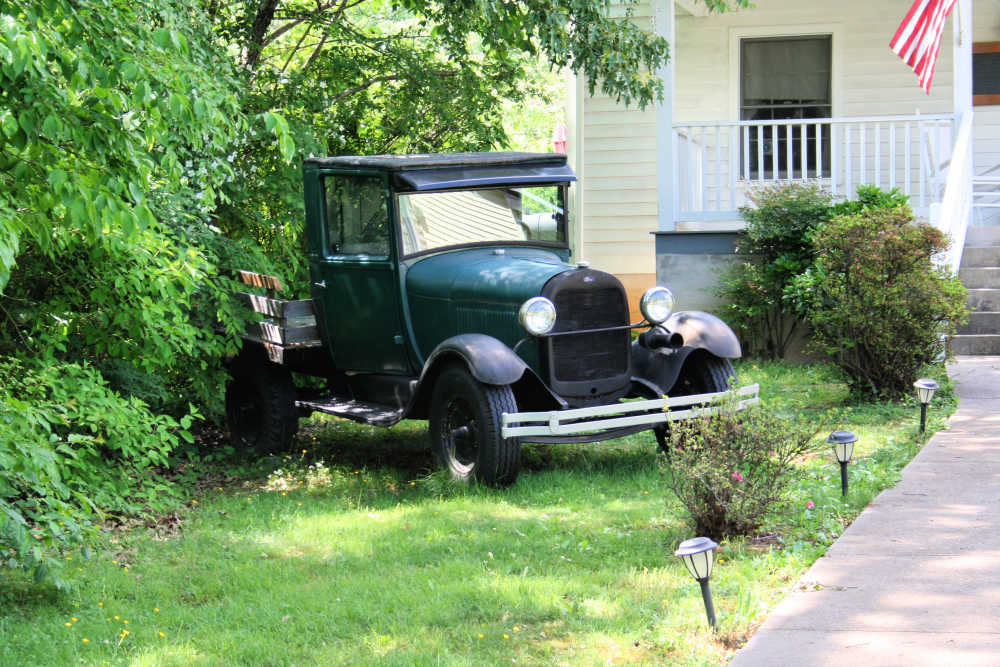
Inside, the old school had been turned into a celebration of all things Walton. The old classrooms had been made into facsimiles of John-Boy’s bedroom, the Waltons’ kitchen and living room, Ike’s Store (actually, the gift shop), and the Baldwin sister’s home. The pony cart used in episodes with Waltons cousin Martha Corinne, a rough and tumble mountain woman who always reminded me of Baba Yaga the witch of Russian folklore, is authentic and stands in its own honored place.

There’s also a room of merchandise from the show, a movie documentary with the actors, and a room full of donated military equipment from the local community. The middle section, the auditorium, is used as a community center.

While the entrance fee was a little steep ($10) the town of Schuyler probably has little other income now. Only one soapstone quarry is left. The new Quarry Garden at Schuyler, a privately owned home recently opened for garden tours, offers a fun destination, but probably doesn’t generate any job opportunities.

One of the old soapstone quarries now doubles as a swimming hole for local teens.

During the time when Mr. Hamner lived in the white clapboard home down the road with his seven siblings and parents, the soapstone quarry about a mile down the lane from his house was a bustling center of commerce. Over 7,000 people lived in Schuyler. Now, like so many sleepy little towns across America, not much is left except lovely fading old homes, a few tourist spots, shady lanes, and history.

We didn’t go into the Hamner house (it was another $6 fee) but I did take pictures outside. It really does look like the Waltons’ house on the television show, except it is missing the two side wings. I can’t imagine eight kids squashed into that house. We were five kids in a house about the same size and it was tight!

One thing that struck me about our visit was the number of visitors to the museum. One couple was on vacation from England and mentioned they had driven four hours out of their way just to see the museum! There were at least several dozen other couples, mostly older folks, visiting the museum.

The conversations, murmured in old school hallways and classrooms, fascinated me. People love the Waltons television show for so many reasons. The most important reason, I think, is what someone said in the documentary film shown in the museum.

I’m paraphrasing, but the gist is this: the Waltons celebrates the nobility of the common man. It celebrates the average person, the ups and downs of the typical American family for whom love, faith, family, and fortitude go hand in hand.

In an age when we are bombarded with violent television shows and every kind of depravity trotted out for entertainment, the Waltons and similar shows remind us that there are good, kind, gentle and hard working people just like us out there. They are content with their lives; sometimes they chafe a bit, as in the episode when Olivia takes painting lessons or buys a bicycle so she feels young again. But for the most part, the daily joys of life, the care of family and home, satisfied.

We’ve really forgotten this, and sometimes as a society, we manage to remember it. We suddenly like shows on Netflix about baking or organizing; we celebrate canning or homesteading, or sewing. Knitting comes back into vogue. But always, chafing behind the slow, quiet comforts of life is the glittery show of other things that lure us away from what is important.

One of the things I love at our church’s Easter Vigil is the renewal of baptismal promises. Every year, this line strikes me: “Do you reject Satan and all his works? Do you reject the glamor of evil?”

The glamor of evil. That’s what most entertainment today makes me think of: the glamor of evil. Evil always looks glamorous, doesn’t it? The excitement of car chases, of police shows, of murder, rape and other horrendous crimes trotted out for us on television looks glamorous. Models, actresses, actors, their lives also seem glamorous. Don’t get me started on those silly ‘reality shows’ that are anything but real life.

Real life is Grandma peeling potatoes in the kitchen, Olivia thumping an iron on a pinafore dress so Erin can look presentable to go to a dance, Elizabeth crying because her kitten died. Real life is John Walton patching the truck tires to make them last and John-Boy reading late at night so he can get into college but still rising at dawn on a weekend to go with his family fruit picking to make some money (and bite into his mother’s yummy pies later). Real life is the church on Sunday, picnics by Drusilla’s pond, hitching Blue the mule to the pony cart and snow storms that threaten to engulf the mountain.

A recreation of the Walton family kitchen. I wanted to pull up a chair and dig into some home cooking!

Real life is love, lived in action, in an everyman family that rejects the glamour of evil for the sanctity of family life.

The Waltons debuted in 1972, poised against The Mod Squad, an action show with hip detectives and racing stuff, and The Flip Wilson Show, a funny comedian. Somehow, someway, they rose to the top. Why? Because something in the family dynamic, the true ‘reality show’ of life, captured the public like nothing before.

Soon we had Little House on the Prairie and a mini golden age of television in the 1970s with funny, clean comedies (Laverne & Shirley, Happy Days), and funny but thought-provoking shows like M*A*S*H and All in the Family.

But nothing in my mind surpasses the homespun charm, the reality of the Waltons.


P.S. There is no Waltons Mountain in Virginia! Earl Hamner loosely based that on a mountain his uncle owned. Schuyler is hilly, but not mountainous.

The Jewels in Our Midst: In Praise of Local Arts and Culture

I don’t know what impetus pushed me out the door last night. Boredom, the arch-enemy of creativity, crept into my work, and thus I found myself seeking any excuse to drive from my farm into town.

I love my farm. I love the life that I live, the quiet, the solitude, the peace. But six days out of seven, it’s just my husband, my cats, and myself. Social media helps break the isolation, a little. However, all the funny memes, status updates, and pictures of friends cannot suffice forever.

A good friend of mine, a professor back in New York and one of my mentors, accepted a position at a university in a rural area of Pennsylvania. This was a woman with season tickets to Lincoln Center, who took me to one of my first performances at that revered institution when I turned 20. I remember how she fretted about her move. It wasn’t the lack of services or moving to a new place that bothered her: it was her worry that she wouldn’t find “culture” as she called it in farm country.

She moved and found to her delight that culture wasn’t far away at all. There was Philadelphia only an hour’s drive away and the Philadephia Orchestra; there were concerts, lectures, and art exhibits on the university campus and at nearby museums.

I didn’t worry quite as much as my friend did about finding live performances and ‘culture.’ I love listening to classical music, but I often prefer my favorite recordings and the radio to live concerts. I enjoy Medici TV, the arts streaming video service, and I get my fill of ballet and opera there.

But sometimes, the radio just doesn’t satisfy. Neither does video. The main problem with both is that we lock ourselves into a cultural bubble. I listen endlessly to my favorites: Mussorgsky, Beethoven, Bach, Jenkins, Einaudi, Dvorak. I discover nothing new.

The music director at my church, Dr. Lisa Kinzer, is also the chair of the local university’s music department, and we are blessed to have a large, interesting, and culturally diverse university smack in the middle of our rural area. She mentioned briefly a week or two ago that she would be performing in the faculty spring recital, and yesterday, a reminder popped up on Facebook (before it crashed and took the world’s outrage with it) (I survived the Facebook outage of 2019!).

So, on the spur of the moment, feeling restless and vaguely unsettled, I mumbled to my husband that I’d decided to go to the concert. I hopped into my car and found myself searching for a parking spot at Longwood University. Finding parking at Longwood is a favorite local sport, sort of like a treasure hunt but on wheels. For a large and wonderful university, it lacks even a single guest visitor spot, and I couldn’t figure out if the parking garage was open or closed.

I finally tucked my car into a spot that may or may not have been a visitor spot, crossed my fingers, and hiked to the campus.

I made my way to the Wygal Building, where I had taken a few voice lessons back in 2016 with one of the professors. I sing with my church choir and love to sing. I’ve enjoyed choral singing as a hobby since my teens, and those lessons were a gift to myself. And probably to my congregation, who may be thankful that I improved, even if ever so slightly.

Anyway, I digress.

I found a seat in the recital hall and waited. I noticed that 99% of the audience was students and the remaining adults in the concert hall, professors and faculty at the university. The concert included three composers I was familiar with: Shostakovich, Hindemith, and Menotti.

But what a gift! The world premiere of a new work by one of the professors, Dr. Gordon Ring. Normally, I dislike modern compositions, but his “Whistler” Portraits for Solo Piano were outstanding. A hint of Debussy colored the last piece – I heard chord progressions similar to La Cathédrale engloutie

concert
Dr. Lisa Kinzer playing the premiere of Gordon Ring’s “Whistler Portraits for Solo Piano.”

Watching the concentration on my friend’s face as she played Ring’s “The Gold Scab” reminded me of why I love live performances and what a treasure we have in Longwood University’s music department. Here I was, seated in a small theater, with astonishingly talented musicians introducing me to new pieces.

Not only was my friend, the pianist, a delight, but all of the musicians. The clarinet soloist. The violinist Naima Burrs– I could write pages about her playing. I typically dislike the violin but she made me love it. Her playing with sublime, sweet, and exuberant, especially in the Peter Schickele piece “Serenade for Three.”

The surprise of the evening was my “discovery” of the well-known modern composer Arvo Part. Part is an Estonia composer who invented tintinnabuli, a form of music inspired by Gregorian chant. The lights dimmed, and as the chords droned and chanted with clarinet, saxophone, and organ, a video projected onto the screen above the stage. Scenes of stars, outerspace flowed by, and then…a butterfly. I was mesmerized by the tiny butterfly amidst the stars of space. I felt hypnotized, wonderfully freed by the droning, strange music.

I loved it.

I would never have discovered that I loved this strange, new-to-me music if I had not picked myself up off the coach, switched off my Netflix binge of Russian Dolls, and took the time to leave my house for a change.

A few miles away from the concert hall, seeders churn fields into life. Logging continues apace on tracts of loblolly pine that roll into enormous fields filled with black Angus cattle. Newborn calves nurse from patient mamas. Pickup trucks, tractors, and hay bales abound.

In the midst of this rural life, in the middle of what many would deem “nowhere”, I found incredible cultural richness. You do not need to be in the middle of one of the great cities of the world to enjoy the finest music, art, theater, and dance. Locally, one may find such treasures whether you are in Philadelphia or Farmville.

Get out. Get to a concert, a performance, an exhibit. Explore local arts and culture!


Pruning Away the Dead Wood

I stepped back, studying the lattice of branches arcing overhead.  My husband stood across from me and a few feet away, studying the apple tree in our orchard.

“Here?” I asked, using the long-handled pruners to tap on the offending branch.

“That one,” he nodded.

It took every bit of strength in my upper arms to close the pruners over the thick branch, squeezing until it finally fell, crashing, to the orchard ground. My trapezius muscles ached, a deep, satisfying pain that meant we had finished pruning eight apple trees in one afternoon. A good day’s work for late winter.

20190224_154239

We collected the branches, living and dead wood, that we trimmed away, tossing it into piles on the edge of the woods where time and nature would return it to the soil. Meanwhile, I surveyed our work.

We planted the orchard the first spring after we moved into our dream farm. The seventeen acres in Virginia’s rolling piedmont seemed like heaven after the crowded canyons of office buildings and honking horns in lower Manhattan where I had toiled away at a marketing job that no longer thrilled me. Now we labored in a different jungle, coaxing thick red Virginia clay to sustain apple, peach, and other fruit trees while I swung through the internet’s trees seeking writing work.

IMG_3228.JPG

I thought of the life I had left and the phrase, “Pruning away the dead wood” while we carted branches into the woods and dodged curious farm cats twining between our legs. 

When I first learned how to prune fruit trees, I snipped delicately, tentatively. Too afraid to honestly cut away the dead and unproductive branches, my trees suffered. They bore less fruit, and the fruit they did bear was smaller, harder, bitter.

One crisp autumn day, I learned the value of drastic pruning from an old farmer high up in the Blue Ridge Mountains. Mr. Al farmed several acres of apple and peach trees on an old family farm high up in the Blue Ridge. He had the upright posture of a longtime farmer, the wiry strength of one who traversed the hilly terrain of the valley for over 86 years. We stopped at his farmstand after hiking the nearby trails and admired the bins of Jonathan, Golden Delicious, and deep ruby-colored heirloom apples.

His trees marched in neat, straight rows, the branches like ladder rungs a child might climb. He stood next to me, studying my admiring gaze. I turned to him.

After exchanging pleasantries, I asked, “How do you get your trees to produce so much beautiful fruit? Do you fertilize them?”

“Sometimes,” he said. Then he spoke the magic words. “It’s all in the pruning.”

“The pruning?”

“Prune hard in winter, gather the fruit in the fall,” he said gruffly. 

He told me more, of course, about how to grow beautiful apples and peaches, and I hope my trees bear the evidence of his field lesson that autumn day. 

Often, we are like gardeners contemplating their first foray into pruning fruit trees: we hesitate when it comes to pruning away the deadness in our lives to let the living parts flourish.

People everywhere mock Marie Kondo’s “Does this spark joy?” phrase, but joy signals vitality. To experience joy is to experience the fresh green sap running through our lives, bringing nourishment to our cells the way xylem and phloem course through the pith and cambium of my apple trees.

Pruning parts of our lives that don’t fit, that are dead or don’t work well should be easy, but it’s not. It’s difficult to step back the way we step away from our apple trees and study them to see the dead wood. We’re too close. We are like the apple tree itself trying to decide which branches go and which stay.

IMG_3210.JPG
Sometimes, nature determines which branches go. The wind knocks dead limbs off during a heavy thunderstorm; insects weaken a trunk. Then it is too late to make changes. Nature forces change.

Our lives can be like that too when nature forces change. A man diagnosed with metabolic syndrome takes up running to avoid diabetes; nature forces him to change and drop 50 pounds before he ends up dependent upon medication for life. An alcoholic spouse forces a broken marriage apart. A dead-end job leaves us sick and depleted, and we know it is our money or our lives, and we choose to live.

My trees rarely demonstrate such clear-cut examples. The apple trees, for instance, waved healthy branches against the blue February sky. What to prune, what to keep? It is then that the field lessons from old Mr. Al, the books I’ve read and my experience combine to help me choose this one, not that one, and shape the trees, so they too look like the ancient specimens in Mr. Al’s orchard. Neat branches, like rungs on a ladder, beckoning a child to climb to the top to filch sweet, crisp apples.

The only way to determine which branches must be pruned and which remain is to step back and away from the tree. It is then we can see the water sprouts. These are branches growing straight to the sky from a horizontal limb. They crowd the central canopy, making it difficult for sunlight to kiss fruit close to the trunk and sweeten it with ripeness. One must be ruthless with these upstarts, the ones that completely close out the light.

In our lives, we must be ruthless too with old habits that completely close out the light. Addictions, which close off health, light, and love, and cut us off from family and friends, must be cut away as ruthlessly as I snip off those upstart branches.

Small branches, little side shoots, must also be pruned. When one prunes these away from the main branch, more energy flows to the larger, more productive branches.

How many small habits, little vices, do we nurture, which sap our energy, time and attention? If we cut our television watching, would we have time to write the novel we dreamed of writing, finish the quilt that sits on its frame or paint the landscape we imagine?

As I wander through the orchard today, examining the handiwork of yesterday, it is surprising to see how the underlying beauty of the form, the shape, of the apple tree is revealed with heavy pruning. It’s as if the beautiful framework was there, all along, waiting to be revealed.

I muse over the many areas of my life demanding pruning. My social media addiction. The little bits of candy I eat throughout the day that slow my weight loss efforts — the time I have spent daydreaming when I could be writing.
Yes, it’s time for winter pruning.

By our fruit, we shall be known.

Is it time for you to prune in your orchard, too?

Goodbye, Peter Tork

Today, the world learned of the passing of Peter Tork. The oldest member of the Monkees, Tork was the sad, puppy-dog-eyed member of the group clowning around in the background of many shots. He had sandy brown hair that seemed to fall over his eyes continually. I imagine teenage girls, sighing over the Monkees, wishing they could be the one to brush back that hair.

I remarked to a friend, “It feels like a bit of my childhood just slipped away,” but that’s not entirely accurate. It feels more like it cleaved, the way rocks or glaciers do, a giant shelf sliced and sliding into the endless ocean of time.

A big chunk of my childhood played out against the soundtrack of The Monkees’ albums.

Continue reading “Goodbye, Peter Tork”

It Was Mine Selected as Top Novella, Receives Great Reviews

My novella, It Was Mine, is receiving pure 5-star ratings on both Amazon and Goodreads – the top rating you can give a book. Shortly after Christmas, I found out that the blogger over at Franciscan Mom had awarded It Was Mine the title of “Best Novella” of 2018.

Screen Shot 2018-12-22 at 1.35.59 PM

I’m thrilled. It’s not a Pulitzer, but it’s something, and it gives me a great sense of satisfaction to know that my story touched at least one person so much that she wanted to share it as a book worthy of recommendation to others.

If you haven’t purchased your copy of It Was Mine yet, it is available in paperback and as a Kindle e-book on Amazon.

The story, as some have said, is a sort of George Bailey meets the Twilight Zone. Elderly, lonely schoolteacher Stanley Huckle wonders what his life would have been like if he had made other choices. He’s always been the good son, the dependable one. He stays home to care for his aging parents. His shyness keeps him from asking his best girl to marry him. And now he is alone and lonely, and he wonders what if he had made different choices?

cc-2018-11-26-8-551-bbimage

Then along comes a strange furnace repairman who offers him much, much more than a money back guarantee. He offers him a new chance at life. Should he choose a fork in the road not taken? Should Stanely go back in time and relive a moment of his life to change his destiny? What if he does…and what if he doesn’t?

There’s a surprise twist at the end that I almost didn’t put into the book but which seems to delight my readers so I’m glad I kept it. It’s a short read (I think Amazon puts the book at “one-hour reads” or something like it) and very “clean” Twilight Zone kind of fun with more character than spookiness. I think you will enjoy it and I hope you buy, borrow, or find a copy of It Was Mine.

Pictures from the Book Signing

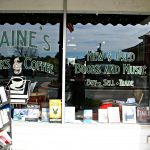
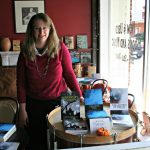
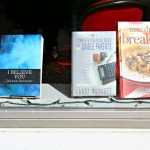
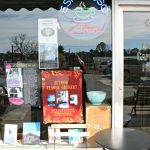
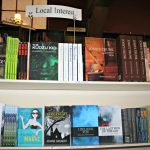
My first book signing and reading event on October 28th was a success – thanks to YOU! A huge thank-you to all of the people who came to the event, and to those on social media who so generously shared the information with their friends and family about it. We had coverage in all the local newspapers, posters in the windows of the bookstore, and my very first book-on-the-shelf moment when I saw my books on a bookstore shelf and went, “Ah…yes…that’s it! Author!”

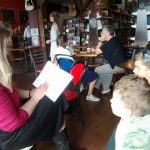
Here, a few pictures from the day’s fun and festivities. I read a brief excerpt from the prologue to my new Majek Family Mystery, “The Red Boy House”, and a short excerpt from “The Last Run of the 6:01.”


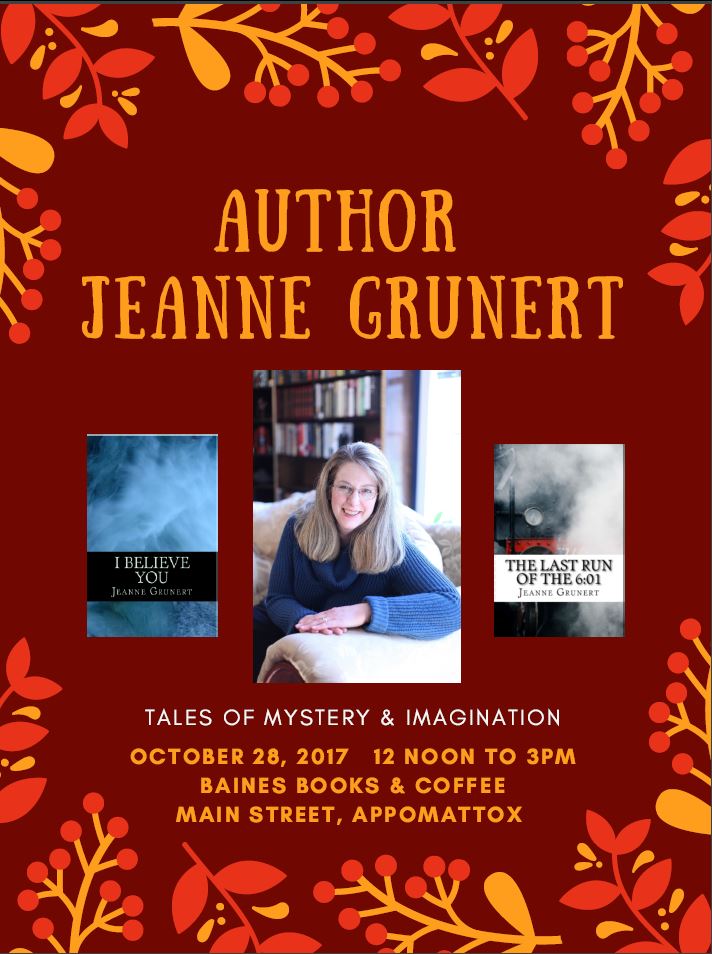
Meet Local Author Jeanne Grunert at Book Signing Event, Baines Books & Coffee, October 28, 2017

Author book signing poster

PROSPECT, VIRGINIA — Local author Jeanne Grunert will be signing copies of her novel, I Believe You, and her new novella, The Last Run of the 6:01 at Baines Books & Coffee, Main Street, Appomattox, on Saturday, October 28, 2017, from 12 noon to 3 p.m. Copies will be available for purchase.

Last year, Grunert released her first novel, I Believe You, to considerable acclaim. Her work blends elements of traditional Gothic fiction, ghost stories, and the mystery genre. One reviewer called her writing “A cross between Flannery O’Connor and Edgar Allan Poe.” Her stories are tales of mystery and imagination akin to spooky tales such as those in the Twilight Zone and other supernatural tales.

Grunert grew up on Long Island, New York, in the shadows of the Gold Coast region made famous by authors such as F. Scott Fitzgerald and Nelson Demille. Working with the area’s rich and famous families while employed as a marketing manager at a local garden center inspired much of the setting for I Believe You. Her latest work, The Last Run of the 6:01, was partially inspired by the opening of the High Bridge Trail and the many train-related stories found locally.

Before moving to the Prospect area, Grunert worked in New York City as a marketing manager for publishing, retail, and financial services companies. She is the recipient of the Brockport Science Fiction and Fantasy Writer’s award and holds an M.A. in Writing from Queens College, New York City. In addition to her fiction works, she is also the author of several gardening books, writes marketing and sales materials for companies worldwide through her company, Seven Oaks Consulting, and writes the popular gardening blog, www.homegardenjoy.com.

For more information on the author’s works, visit her website at www.jeannegrunert.com. Her books will be available for purchase locally from Baines Books and Coffee starting October 28, 2017. You can meet the author in person at Baines on October 28 from noon to 3 p.m.  Books will be available at a special event price.

DETAILS

Book Signing Event, Saturday, October 28, 2017, from 12 noon to 3 p.m.

Author Jeanne Grunert. Author website: www.jeannegrunert.com

Baines Books & Coffee, 205 Main Street, Appomattox, Virginia

The event is free to attend. Books may be purchased at the event. The author will be signing books and if time permits, reading from her works.

error: Content is protected !!